Resilience Simulation: What and Why
Why Resilience? {.smaller}
::::: columns
::: {.column width=”50%”}
 {height=250px}
Engineered systems are “brittle”
:::
::: {.column width=”50%”}
 {height=250px}
Natural systems “bounce back” ::: :::::
What if we could adapt to hazardous events so they don’t become catastrophes?
Disasters and the unpreventable – How do we respond when we can’t preempt?
Autonomy and new technologies—How do we engineer hazard mitigation?
What is Resilience? {.smaller}
A widely agreed-upon definition is:
(The) ability to prepare and plan for, absorb, recover from, and more successfully adapt to adverse events
Key Points:
Resilience is understood as an ability: Adaptive Capacity
e.g., the system can prepare for and/or mitigate given condition(s) A system can be:
Resilient to X (specified condition, hazard, scenario, disruption or change etc.)
Generically resilient—to large numbers of scenarios, unspecified or unknown conditions
Related Concepts You May Have Heard of
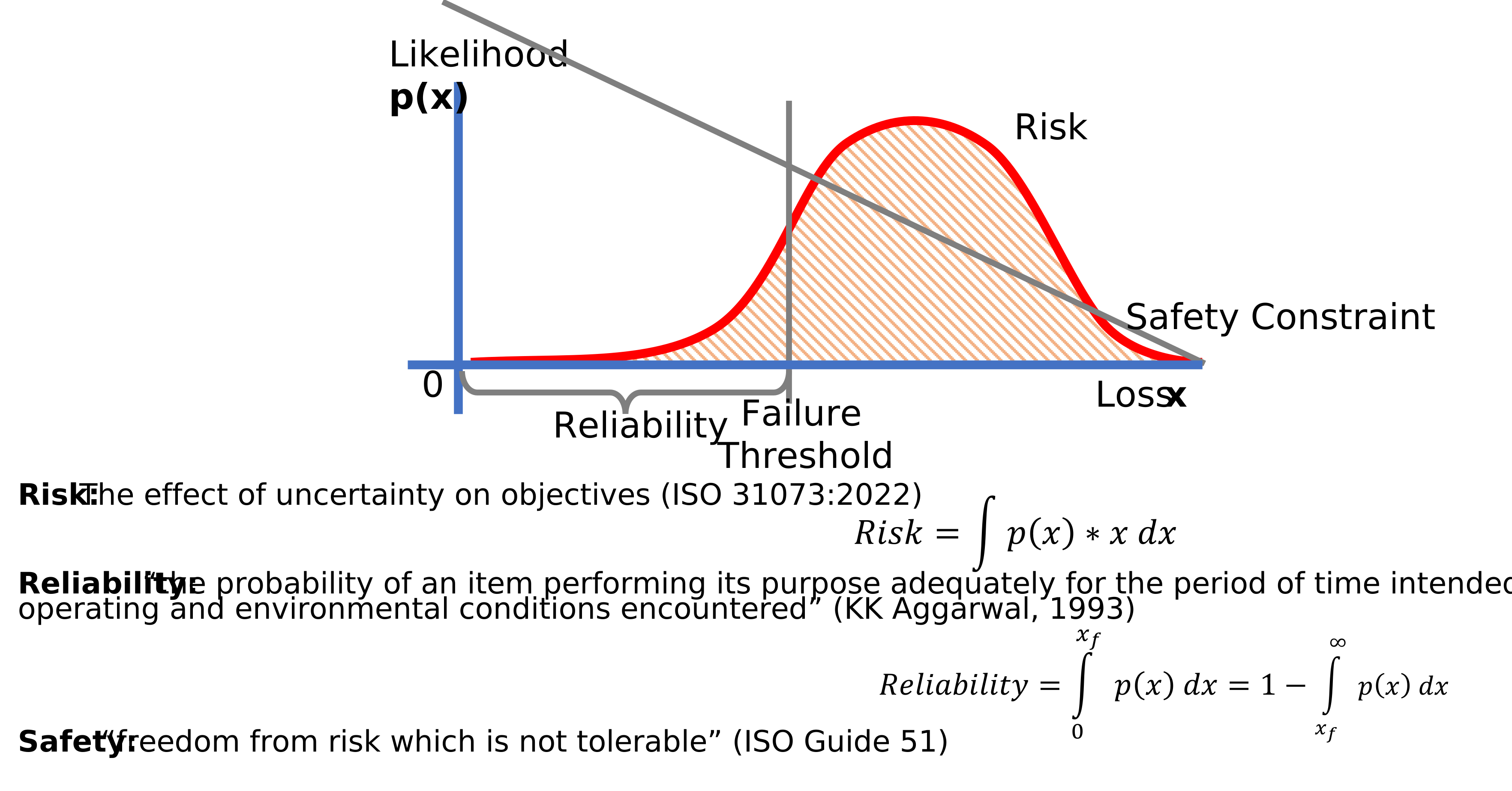
Connection of Resilience to Resilience to Risk and Safety
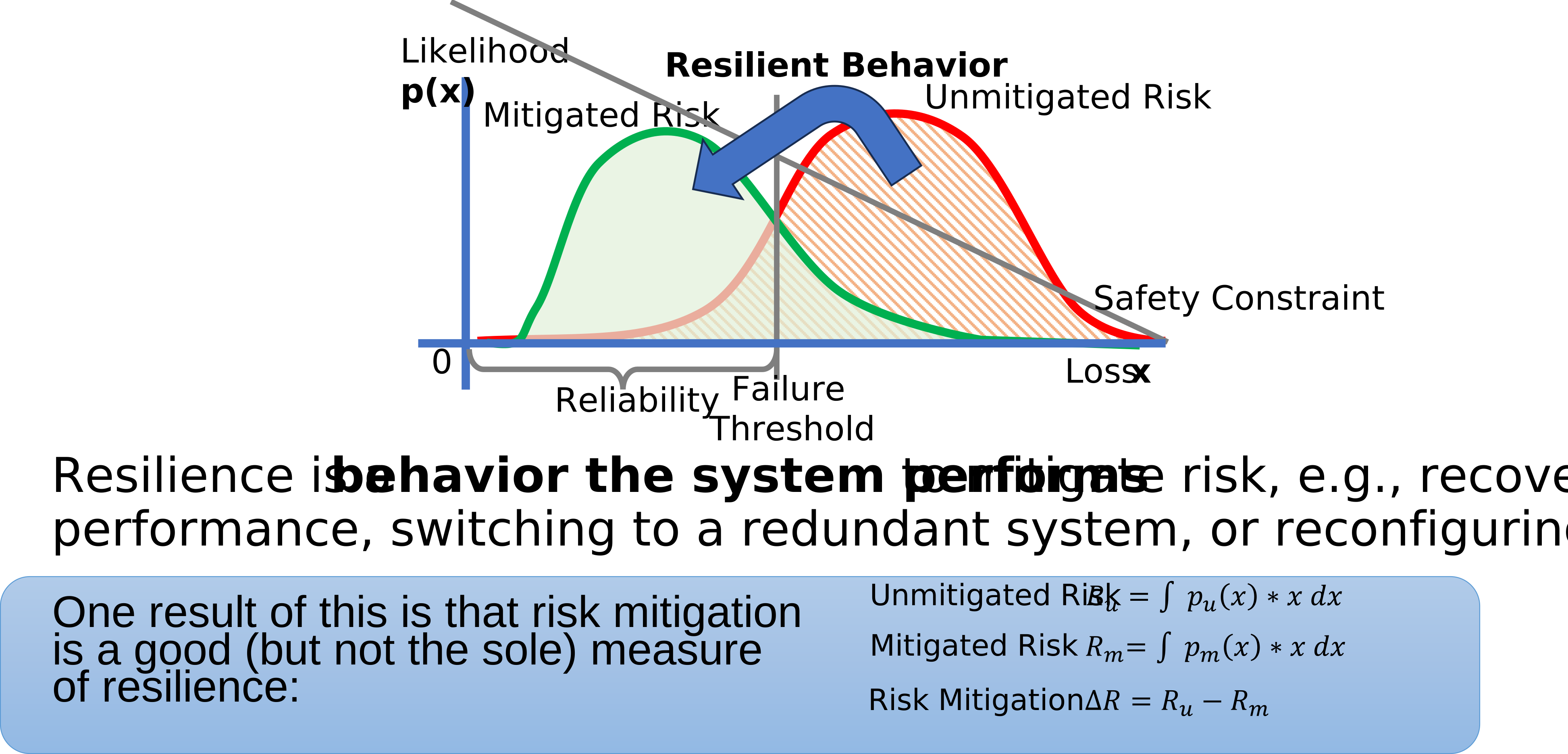
What’s different about resilience?
Resilience is about the dynamics, interactions, and control of hazardous scenarios.
Traditional risk and safety processes are generally about quantifying probability of “success” versus “failure” and may rely on relatively simple models to do so
Resilience is about navigating the complex interactions between system behaviors to improve hazard mitigation via a variety of metrics (e.g., recovery, robustness, etc.)
Again, risk, reliability, safety, and resilience are not mutually exclusive concepts–the main difference is what the given frameworks emphasize
How to think about resilience simulations
A simulation tells us how resilient a system is or can be with a given set of features
All models are wrong, some are useful
-George Box
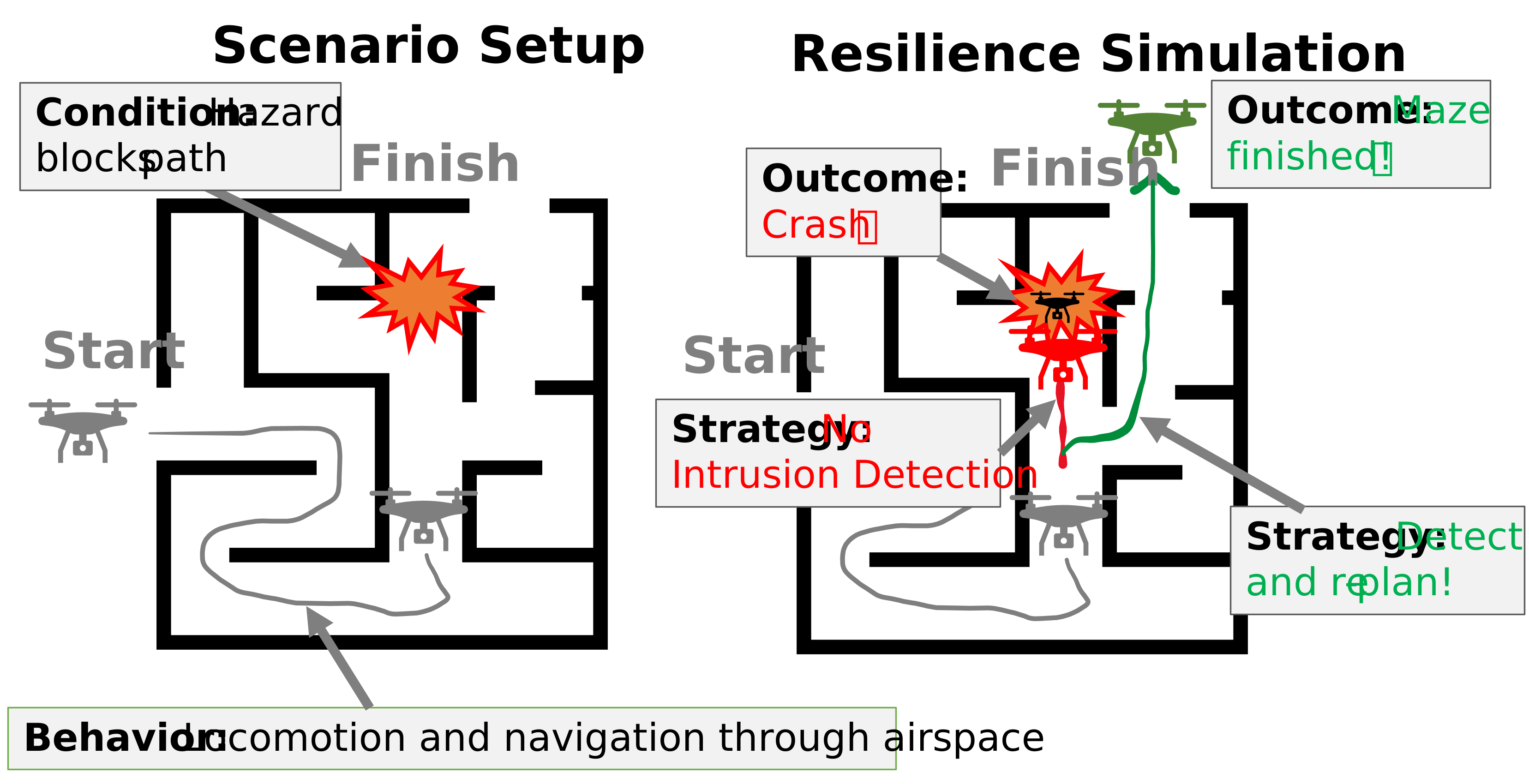
Simulation of resilience can be thought of as a game with:
The behaviors the system is going to embody and how they interact
The conditions the system is going to operate over
What is the system’s strategy for dealing with these scenarios?
What are the good or bad outcomes
We can call the system more resilient when those strategies improved the outcome(s) There may be many metrics to capture this this!
What does that look like? {.smaller}
Things to consider:
Our model can be pretty abstract and still give us answers we can use
There may be multiple places the drone could be blocked!
If we really want to know how well this strategy performs overall, we may want to test it in a wide range of scenarios
How does fmdtools help?
Representing the complexity required for resilience analysis: by providing flexible, composable modeling paradigm
Reducing setup costs: By providing built-in analysis and simulation methods
Providing capabilities aligned with our research on (1) sampling the hazardous state-space, (2) representing human agents in these systems and (3) optimizing model resilience metrics
Demonstrative Example: Drone Proximity to Threat Evaluation
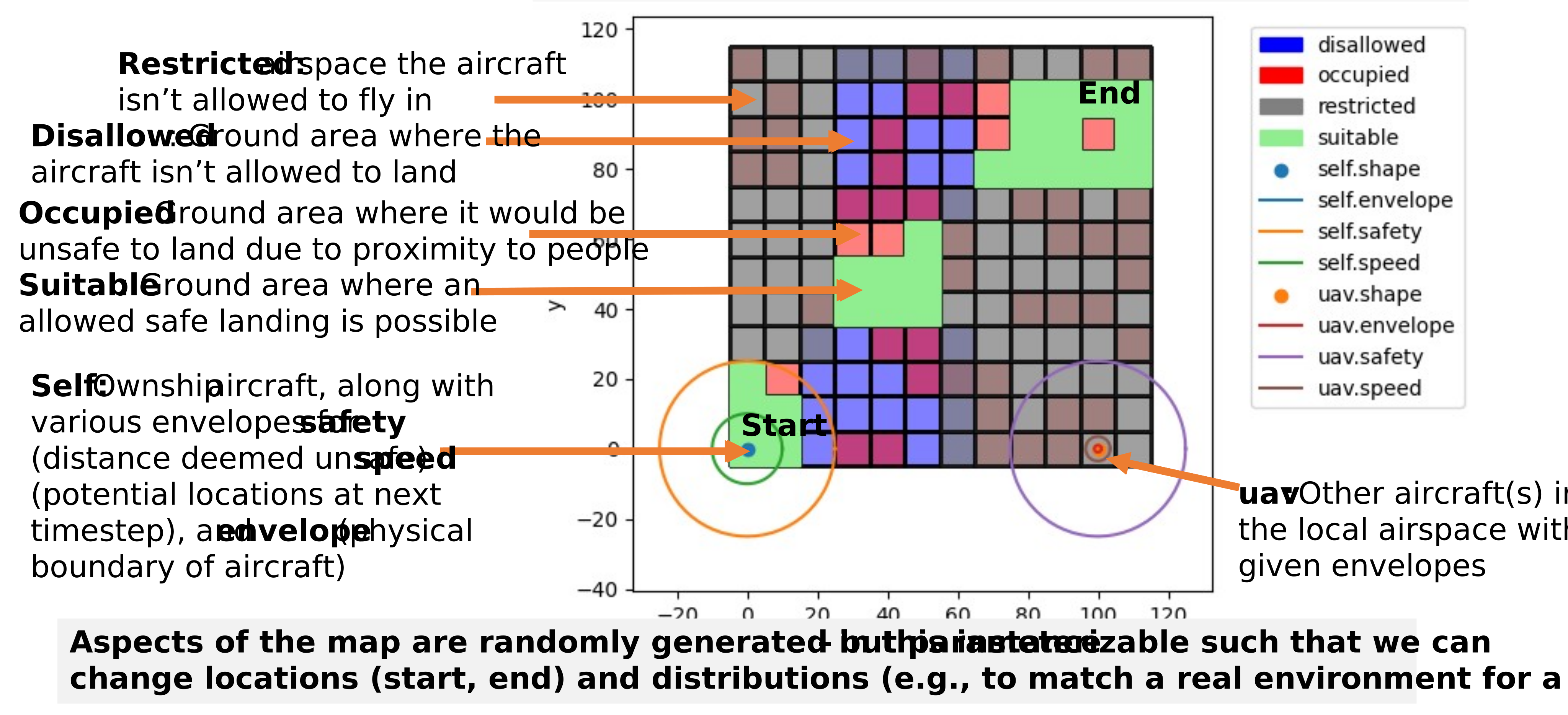
Created adaptable domain-specific library that can be used to model aircraft and drones in the airspace
Focused on safety to collision with other aircraft as well as landing
Question “How does state awareness of other air threats improve drone resilience to collision?”
Model at
examples/airspacelib/contingency_management
Model Setup
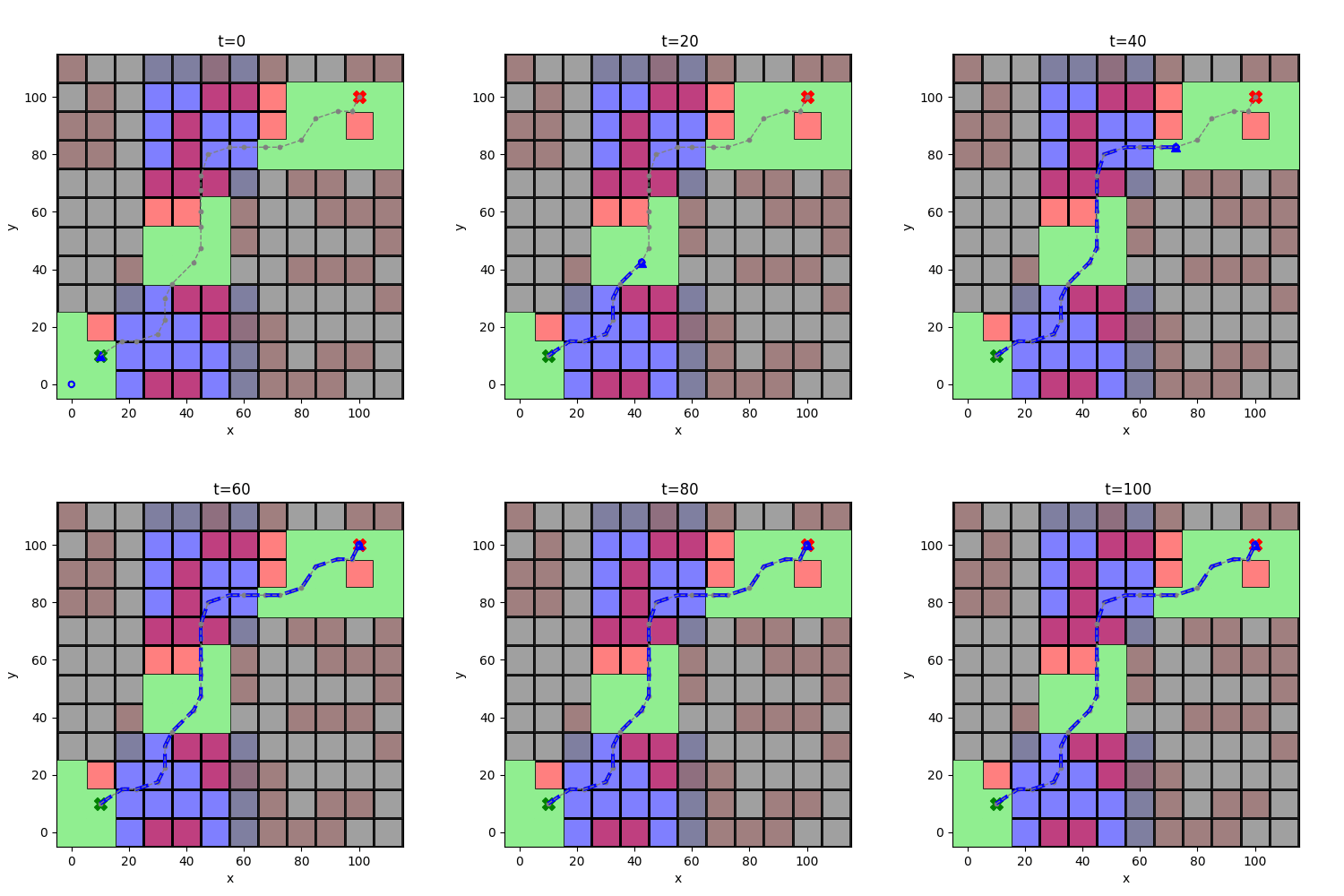
Simulation - Nominal
Simulation - Hazards
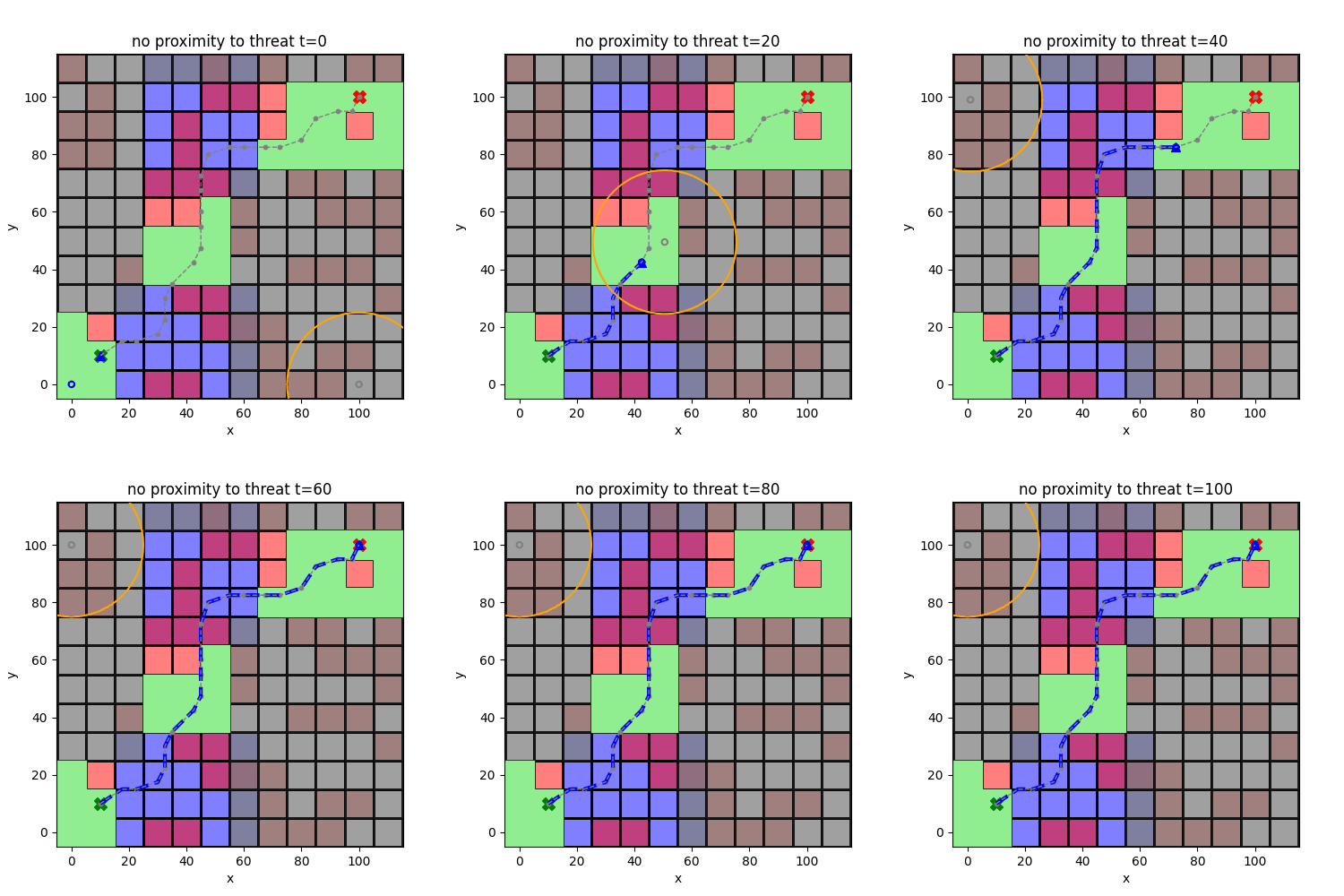
Without proximity to threat functionality, drone may fly into errant intruding drone
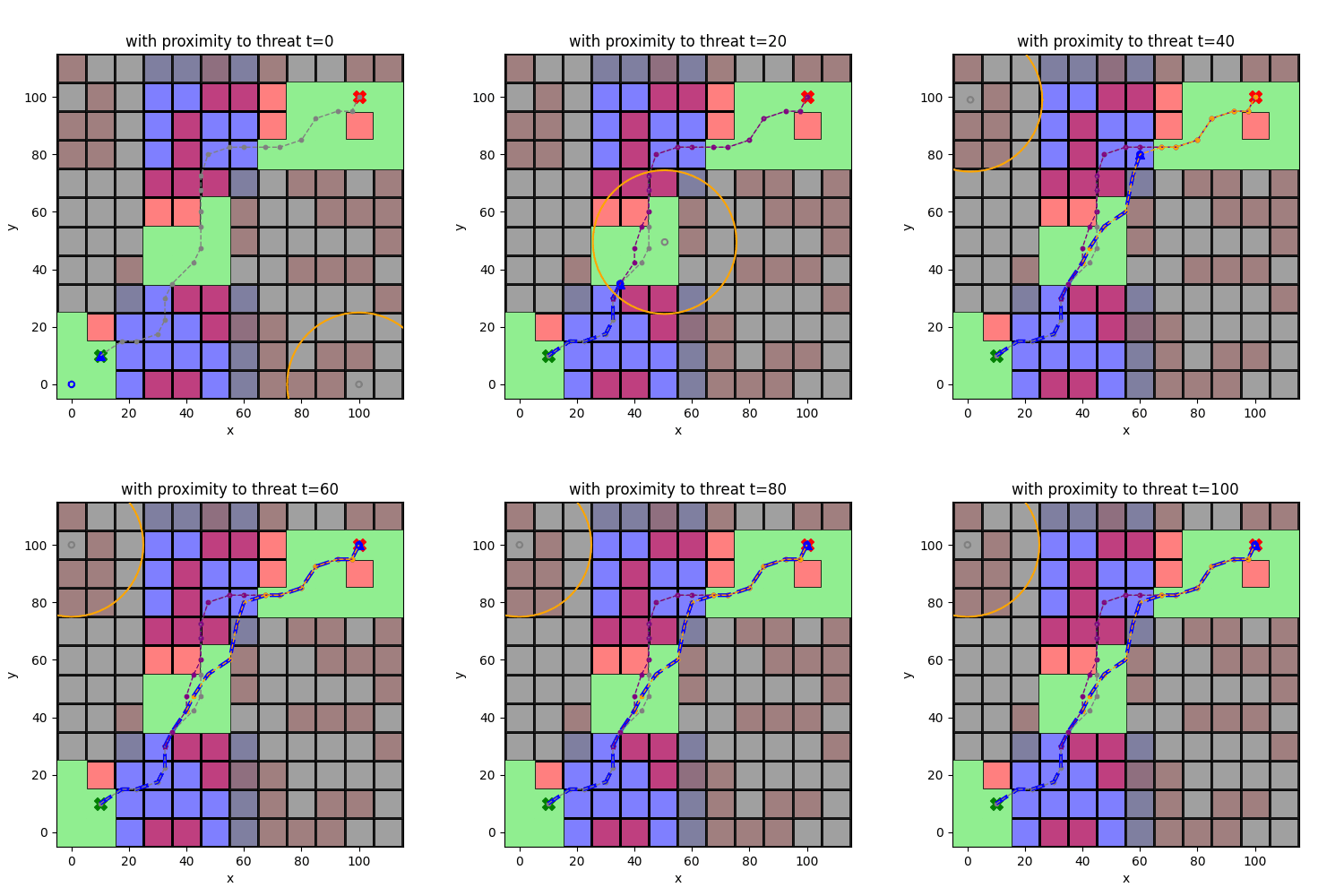
Proximity to threat functionality causes a pause in mission as well as mission re-planning
Conclusion {.smaller}
Resilience is the capability of a system to actively prevent, mitigate and/or adapt to hazardous and/or anomalous conditions. To evaluate system resilience, we need ways of capturing:
How a system’s dynamical behavior(s) intensify or mitigate a given set of hazardous conditions
How the system is controlled at a high level, including interactions between its operator/autonomy, physical behaviors, and environment
Modeling and Simulation gives us the ability to analyze systems resilience to hazardous scenarios
Can instantiate wide ranges of scenarios we practically cannot test in the real world or even a more detailed sim
The fmdtools framework can the foundation for analyzing the resilience of any system of interest