Overview: Taxiway Model
Motivation
Safety of systems of systems (such as the airspace) results from the distributed situation awareness of the individual actors (e.g., Pilots, ATC, etc.)
To best understand this distributed situation awareness of systems of systems, we need ways to represent it in a simulation
The taxiway model provides a simple systems model of an airport taxiway we can use to understand distributed situation awareness
Model Structure {.smaller}
:::: {.columns} ::: {.column width=”55%”}
The taxiway model has three main agent types:
Helicopter, which lands and takes off from a helipadAircraft, which lands at a runway, taxis to a gate, and takes off from a runwayATC, which coordinates operations
These agents interact via the flows:
Ground, aMultiFlowtracking the map as well as agent assignments/allocationsLocation, aMultiFlowtracking the position/velocity of each route, andRequests, aCommsFlowtracking messages between ATC and assets ::: ::: {.column width=”45%”}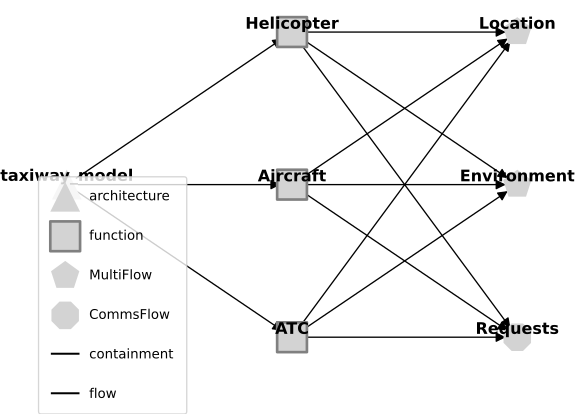 :::
::::
:::
::::
Environment
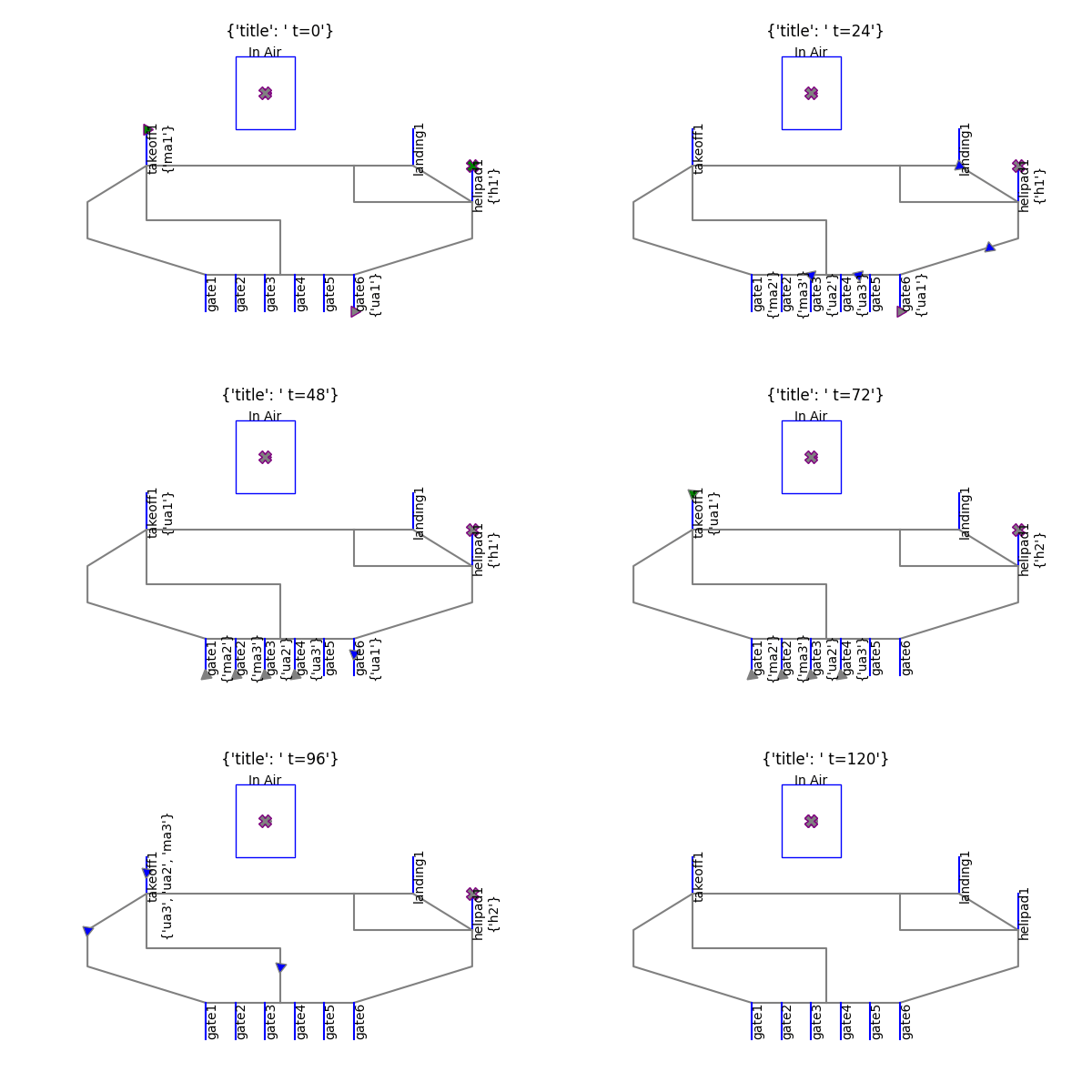
In this environment, aircraft cycle between In Air, landing, gate, and takeoff locations while helicopters cycle between In Air and helipad locations
Hazard Simulation - Incorrect Requests {.smaller}
Below, we model the situation of Air Traffic Control issuing an incorrect approval to land that is not caught by uav2 due to a poor sight (no_sight fault).
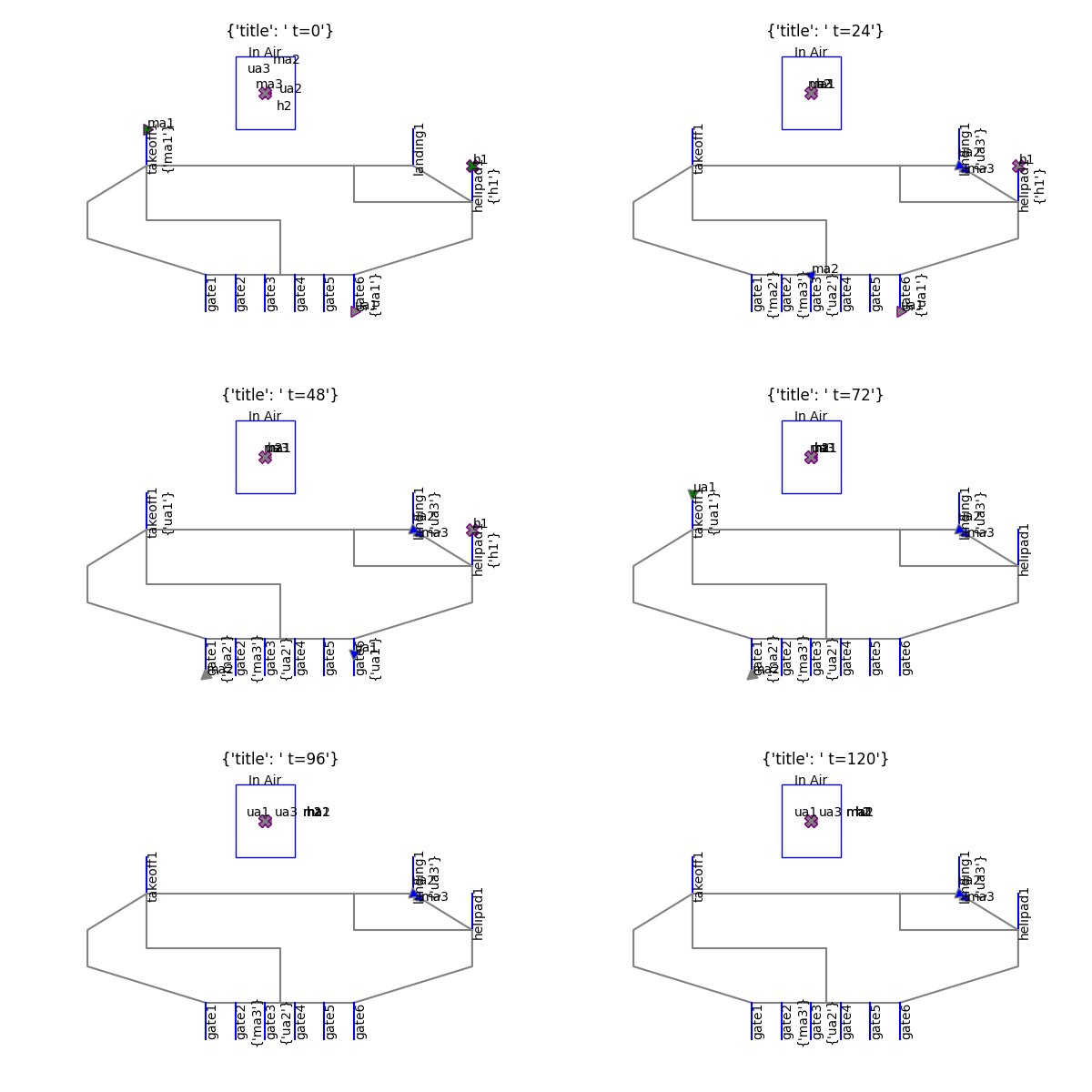
As shown, in this scenario, the uav2 lands on an occupied airstrip, causing a crash, and further aircraft are blocked from attempting to land.
Note that while the simulation continues to play out with landings/takeoffs, this would normally cause a shutdown of airport operations.
Analysis of Distributed Situation Awareness {.smaller}
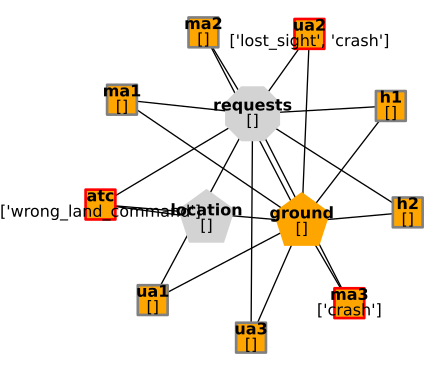
Distributed Situation awareness in fmdtools can be represented as graphs of information connecting the various agents, as shown below.
:::: {.columns}
::: {.column width=”45%”}
 {height=250}
At t=20, the map has an overbooked location, while ua2 and ma3 have crashed into each other due to the wrong_land_command issued by atc.
:::
::: {.column width=”55%”}
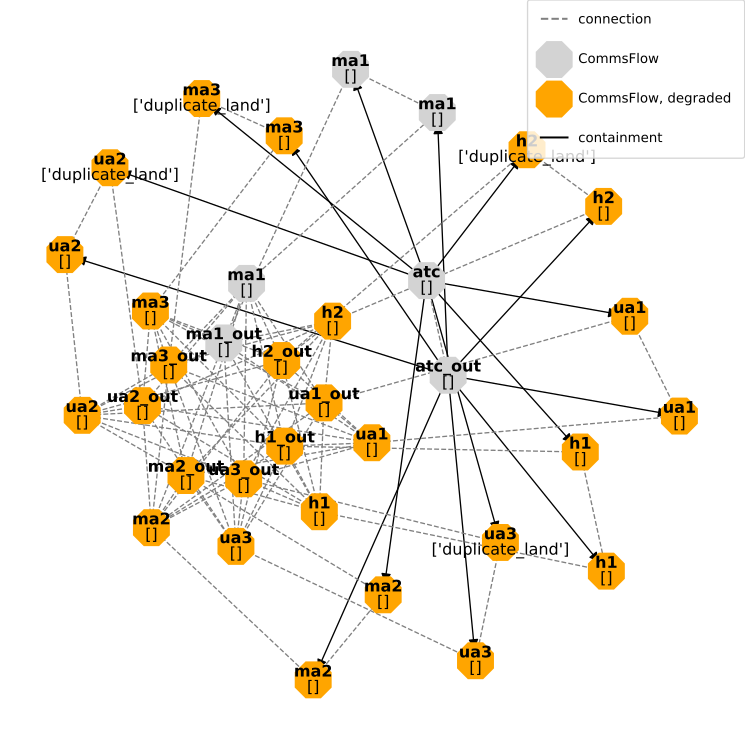 {height=250}
This graph shows the extend of the faults effect on communications at time t=10, where the in-air aircraft now have been given duplicate landing commands ::: ::::
Conclusions
The taxiway model showcases how fmdtools can be used to model distributed situation awareness in a complex system-of-systems
Further reading:
Irshad, L., & Hulse, D. (2025). Toward Early Design Modeling and Simulation of Distributed Situation Awareness. Journal of Computing and Information Science in Engineering, 25(6), 061001.