Cloud Workspace Setup
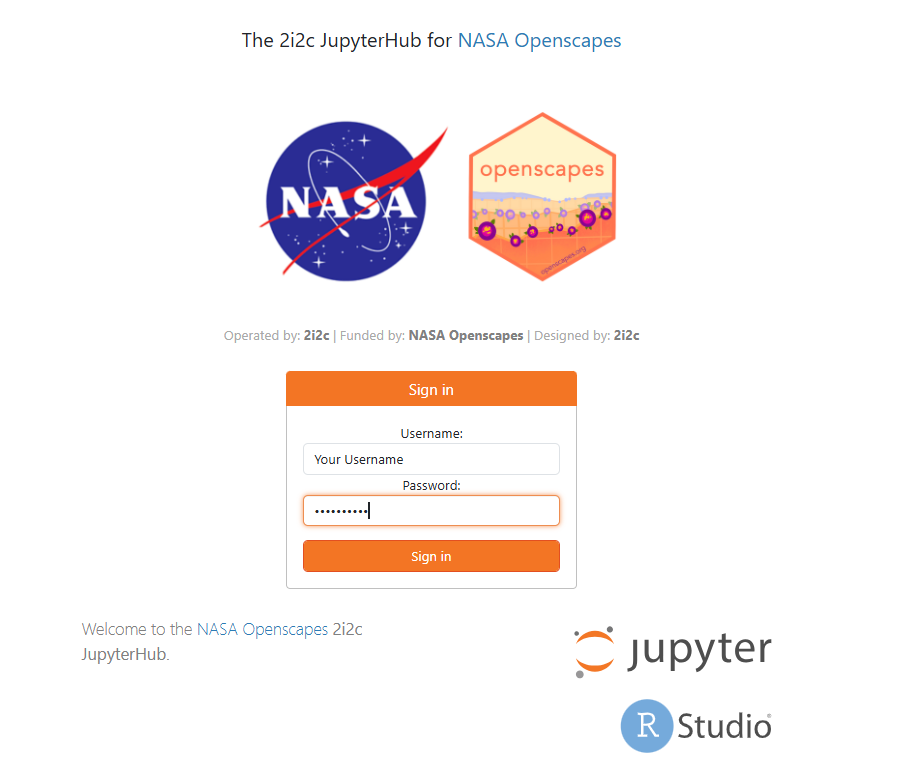
After completing the prerequisites you will have access to the Openscapes 2i2c JupyterHub cloud workspace. Click here to start JupyterLab. Use your email and the provided password to sign in. This password will be provided in the workshop.
After signing in you will be prompted for some server options:
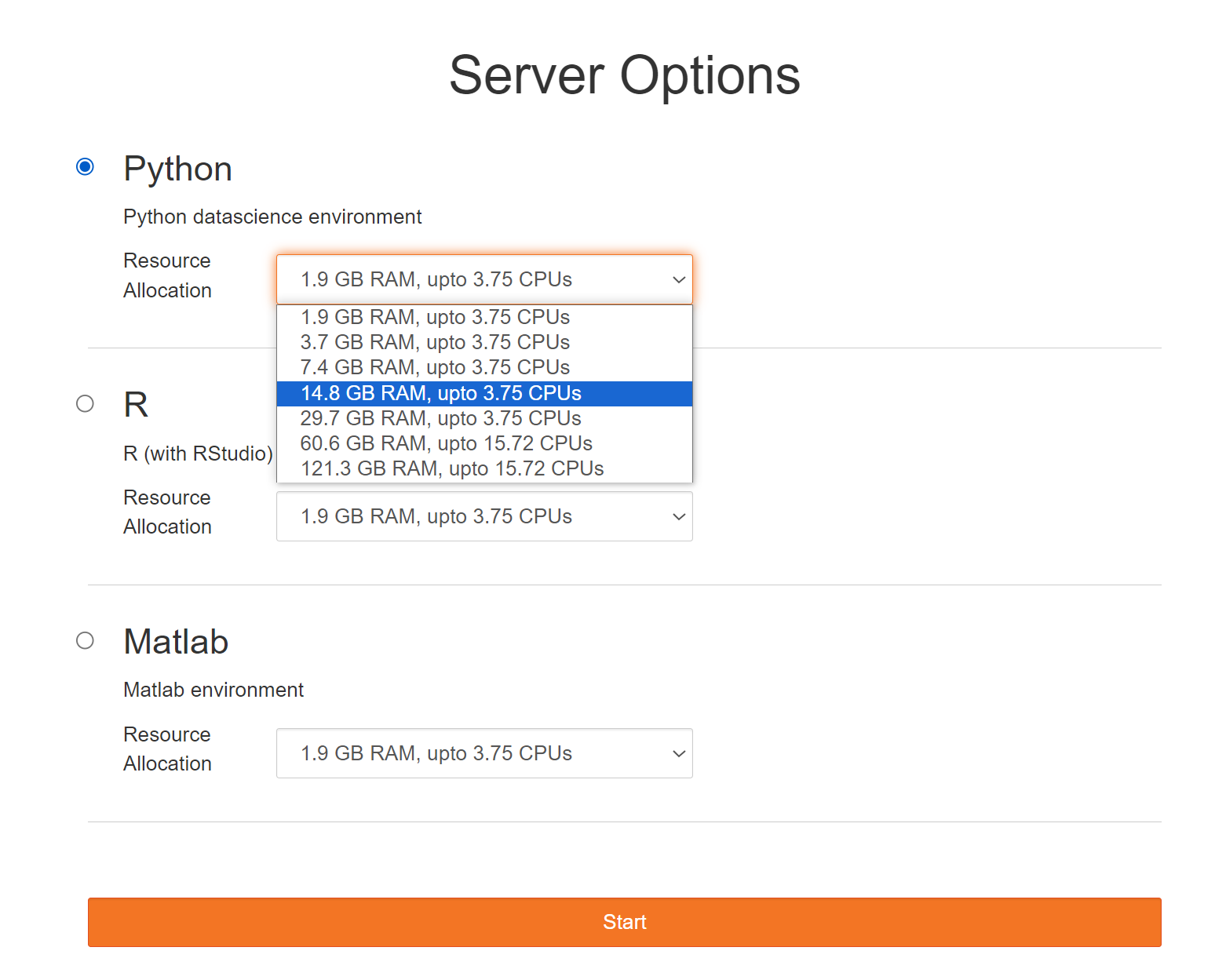
Be sure to select the radio button for Python and a size of 14.8 GB RAM and up to 3.75 CPUs. Note that the available sizes can change slightly, pick the closest available.
At this point you can use the terminal to clone the repository.
Cloning the VITALS Repository
If you plan to edit or contribute to the VITALS repository, we recommend following a fork and pull workflow: first fork the repository, then clone your fork to your local machine, make changes, push changes to your fork, then make a pull request back to the main repository. An example can be found in the CONTRIBUTING.md file.
If you just want to work with the notebooks or modules, you can simply clone the repository.
To clone the repository, navigate to the directory where you want to store the repository on your local machine, then type the following:
git clone https://github.com/nasa/VITALS.gitThe repository contains Python tools which the notebooks use that need to be installed in the existing environment. This needs to be done each time you launch a JupyterLab instance. These can “import” once they’ve been installed. After cloning the repository, change directories and install them using the following in the terminal:
cd VITALSpip install --editable .Troubleshooting
We recommend Shutting down all kernels after running each notebook. This will clear the memory used by the previous notebook, and is necessary to run some of the more memory intensive notebooks.
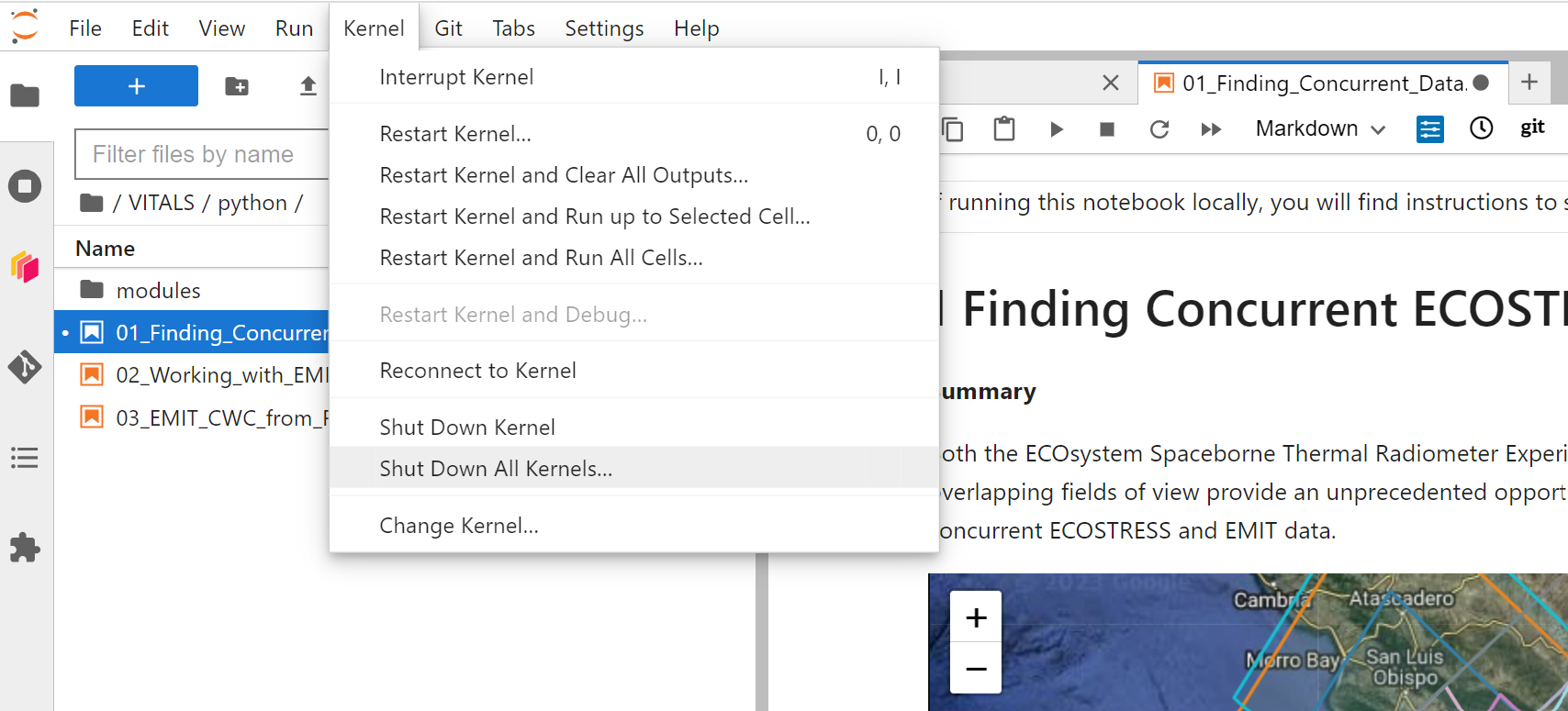
No single notebook exceeds roughly the limit using the provided data, but if you choose to use your own data in the notebook, or have 2 notebooks open and do not shut down the kernel, you may get an out of memory error.
If you elect to try this on your own data/ROI, you may need to select a larger server size. This will often happen if you are using the last EMIT scene from an orbit. In some cases those can be almost double the size of a normal scene. Please select the smallest possible.
If you are getting an import failure for vitals.emit_tools or another vitals library, run the following from the
Contact Info
Email: LPDAAC@usgs.gov
Voice: +1-866-573-3222
Organization: Land Processes Distributed Active Archive Center (LP DAAC)¹
Website: https://www.earthdata.nasa.gov/centers/lp-daac
¹Work performed under USGS contract 140G0126D0001 for NASA contract NNG14HH33I.